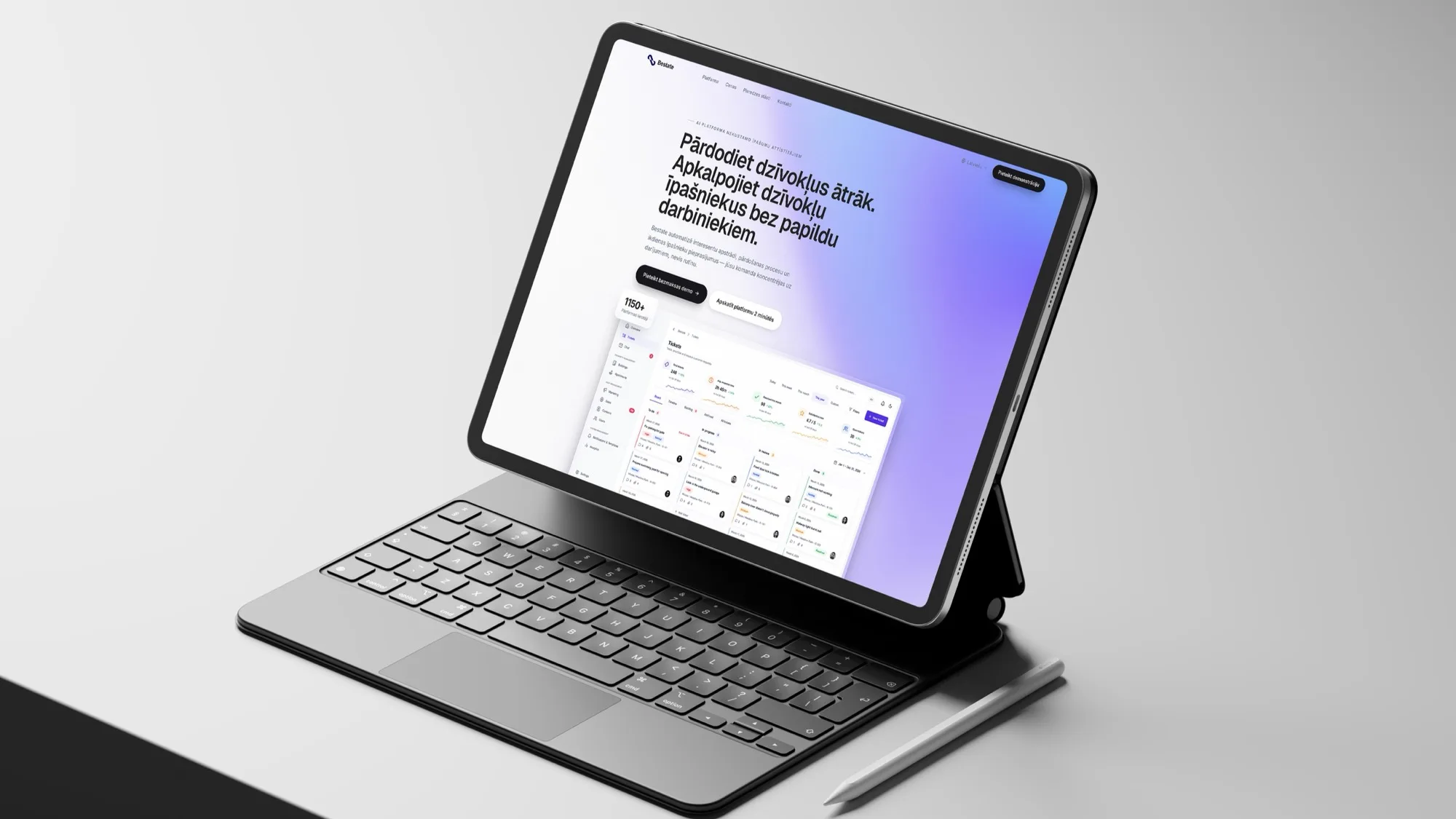
Bestate.app
A CRM and operations platform for developers: sales, apartment data, warranty cases and an owner portal on one record.
When a standard CRM needs workarounds for half of your process, we build one that fits it, with sales, service, tasks and customer data in one place.
The CRM holds the contacts, but deals, handovers and follow-ups are tracked somewhere else.
After the sale someone enters the customer again, and what the team knew about them is lost.
Licence costs grow with every new user, and the workflow you depend on still doesn't fit.
Every “where is my request?” becomes a call or an email to the team.
Stages, roles, handovers and the exceptions nobody wrote down.
We separate what the team needs from day one from what can wait, and check what an existing tool already covers.
We import customers and their history, then connect email, website forms and accounting.
Screens for each role, permissions, and automation for the steps that repeat.
The team starts with the core, and new modules follow real use.
Stages that match how you sell, with enquiries arriving from the website, email and campaigns.
Status, priority, owner and deadline on every case, so work doesn't stall between teams.
Customers see their records, documents and request status without calling the team.
Pipeline, workload and response times, from data the system already holds.
Data from accounting, email and the website lands on the record it belongs to, with AI steps where they help.
AI automationWe build on widely used web technology, so your own developers, or another team, can maintain the system later.
When your core process keeps needing manual steps outside the CRM, or sales and service need to work from one record. If a standard tool fits, we'll say so.
Yes. As part of the rollout we import customers, deals and history from your current CRM or spreadsheets.
It depends on the modules, roles and integrations. We start with the core process, and after a first conversation we prepare a plan with scope, timeline and cost.
Yes. The data is structured from the start, so AI steps such as classifying requests or drafting replies can go in wherever they help.
Automating the work between your systems: enquiries, documents, data and notifications.
Agents that carry out a defined task inside your systems and hand over to a person when needed.
Platforms, assistants and automation for property developers and managers.
Show us how the work runs today. We'll tell you whether a custom system is worth building, or whether your current CRM can be extended.